
How to Improve Forward Head Posture for Good
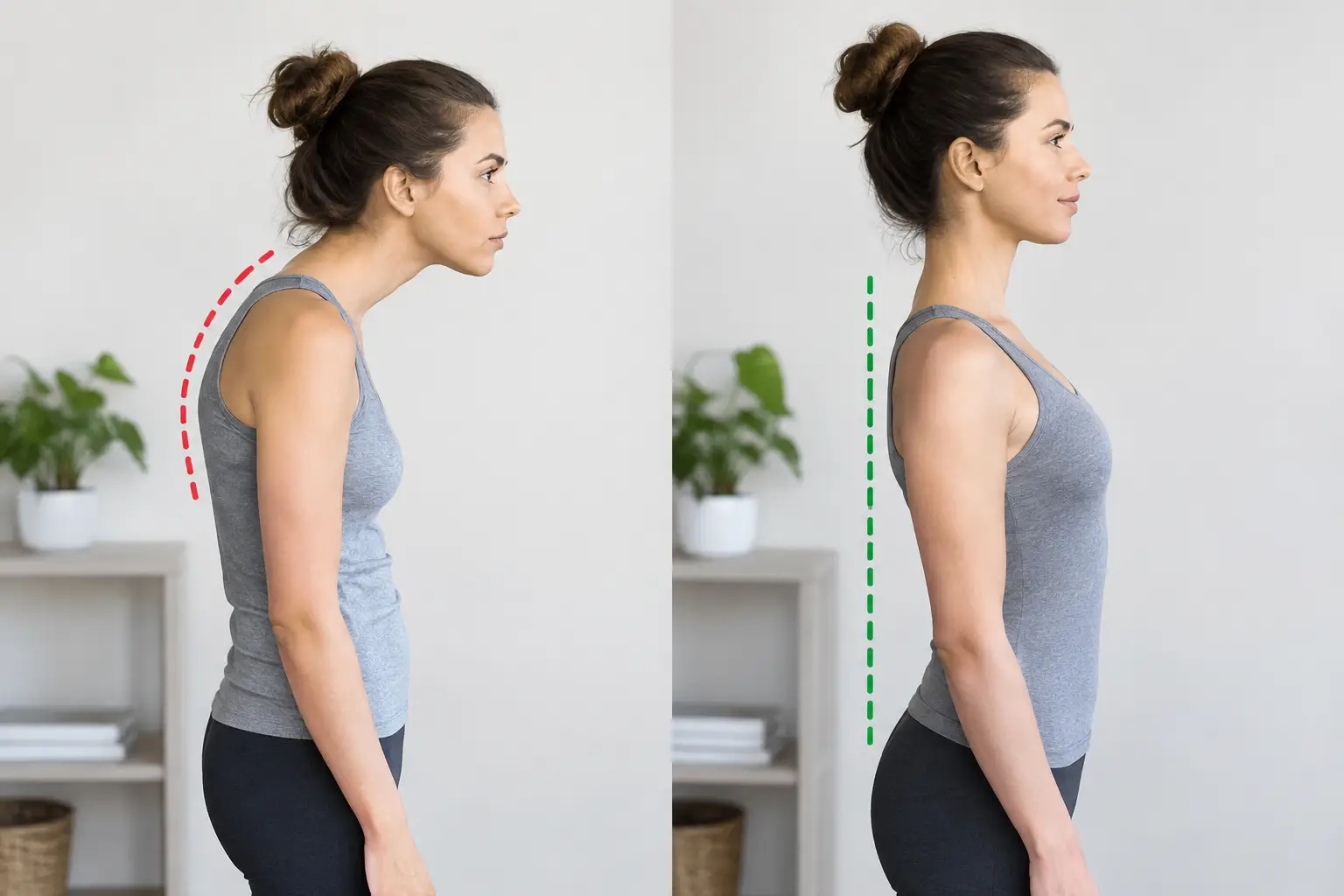
Your head weighs roughly 10 to 12 pounds in a neutral position. When it consistently drifts forward, the muscles, joints, and discs in your neck and upper back must work much harder to hold it there. Learning how to improve forward head posture is not about forcing your shoulders back for a few minutes. It is about identifying why your body has adapted to that position and building the strength, mobility, and daily habits needed to support lasting change.
A forward head position can contribute to neck tightness, headaches, shoulder tension, reduced range of motion, and aching between the shoulder blades. For many people, it also becomes part of a larger pattern involving rounded shoulders, a stiff upper back, poor workstation setup, old injuries, or spinal alignment changes. The goal is not simply to look straighter. It is to restore better movement, reduce unnecessary strain, and help your body function the way it should.
What Forward Head Posture Really Means
Forward head posture occurs when the head sits in front of the shoulders rather than being stacked comfortably over them. It is sometimes called “text neck,” but phone use is only one possible contributor. Long hours at a laptop, driving, reading, repetitive work, stress-related muscle tension, weak postural muscles, and previous car accidents can all play a role.
The body is remarkably adaptable. If you spend enough time looking down or reaching forward, certain muscles may become overworked while others lose strength and coordination. The muscles at the base of the skull and the front of the neck may tighten. The chest can become restricted, while the deep neck stabilizers and muscles that support the shoulder blades may not do their job efficiently.
This does not mean every person with a forward head position has pain, and it does not mean posture alone explains every headache or neck problem. Symptoms depend on your health history, activity level, spinal condition, sleep habits, work demands, and the extent of the underlying movement pattern. That is why a one-size-fits-all posture correction plan often falls short.
Why Chin Tucks Alone Do Not Fix the Problem
Chin tucks are commonly recommended because they can help activate the deep muscles that support the neck. They can be useful, but they are only one piece of the picture. Repeating an exercise without addressing the rest of the chain may lead to frustration, especially if the upper back is stiff, the shoulders are rounded, or the neck is already irritated.
To improve forward head posture in a meaningful way, your care plan may need to address three connected areas: mobility, stability, and daily positioning. Mobility involves restoring comfortable movement in areas that have become restricted, often including the upper back, chest, ribs, and neck. Stability means retraining muscles to hold improved alignment without constant effort. Daily positioning addresses the habits that repeatedly pull you back into the same pattern.
It also matters how you perform corrective exercises. Aggressively pulling the head backward or forcing the chin down can irritate sensitive neck structures. The best movement feels controlled and gentle, not strained. If you notice dizziness, numbness, shooting pain, worsening headaches, or pain traveling into the arm, stop and seek a professional evaluation rather than pushing through it.
Daily Habits That Support Better Alignment
Posture changes more effectively when your environment supports the work you are doing. You do not need to sit perfectly all day. In fact, no single position is ideal for hours at a time. Regular movement is often more valuable than trying to hold a rigid posture.
Set Up Your Screen and Workstation
Place your primary screen close to eye level so you are not repeatedly bending your neck down. Keep the screen directly in front of you rather than off to one side, and position your keyboard and mouse close enough that you do not have to reach forward with your shoulders.
If you work from a laptop, a separate keyboard and mouse can make a meaningful difference. For parents, students, and remote workers in Forsyth County who spend long days at a screen, even a few small adjustments can reduce the repeated stress that reinforces a forward head position.
Break Up Long Periods of Sitting
Set a reminder to stand, walk, or change positions every 30 to 60 minutes. A short break does not need to become a workout. Look away from the screen, gently roll your shoulders, take several easy breaths, and move your upper back through a comfortable range.
When using a phone, bring it closer to eye level when possible instead of dropping your head toward it. This will not eliminate every posture issue, but it reduces one common source of repeated neck flexion.
Build Strength With Control
A clinician may recommend targeted exercises such as gentle cervical retraction, upper-back extension movements, chest stretching, and shoulder blade strengthening. The right combination depends on your examination findings and symptoms.
For a basic neck retraction, sit tall with your eyes level. Gently glide your head straight backward as though making a double chin, without tilting your head up or down. Hold briefly, relax, and repeat only within a pain-free range. The motion should be small. If it creates sharp pain or feels like you are jamming your neck backward, the movement needs to be modified.
Breathing also matters. Many people with neck tension breathe shallowly into the upper chest, which can keep accessory neck muscles working overtime. Slow diaphragmatic breathing while allowing your ribs to expand can help reduce unnecessary tension and improve body awareness during postural training.
Check Your Sleep Position
Your pillow should support your neck without forcing your head too far forward, backward, or to the side. Stomach sleeping can keep the neck rotated for long periods and may aggravate symptoms in some people. Side or back sleeping is often easier on the neck, but the best choice depends on comfort, shoulder pain, sleep quality, and individual anatomy.
Corrective Care Looks Beyond a Quick Adjustment
When posture changes are connected to persistent pain, limited motion, migraines, numbness, or a history of injury, professional assessment can help get to the root of the problem. A thorough evaluation should consider spinal alignment, joint motion, muscle balance, neurological signs, work and sleep habits, and your personal health goals.
At Natural Medicine & Chiropractic Specialties, corrective chiropractic care may include a Chiropractic BioPhysics-informed approach designed to evaluate and improve spinal alignment and function over time. Depending on your needs, care may also involve specific spinal adjustments, therapeutic exercise, spinal decompression, Class IV laser therapy, or other non-invasive options intended to support pain reduction and tissue recovery. Not every patient needs every service. Your plan should be based on clinical findings, not a preset package.
Corrective care also requires consistency. A few good days of exercise will not necessarily reverse a pattern built over years. Lasting improvement usually comes from a coordinated plan that combines in-office care, home recommendations, strengthening, mobility work, and better daily movement choices. Progress is often measured by more than a photograph. Less neck tension, fewer headaches, improved ability to turn your head, more comfortable computer work, and easier exercise are meaningful signs that function is improving.
When to Schedule an Evaluation
A posture assessment is especially worthwhile when forward head posture comes with ongoing pain or limits what you can do. Seek timely care if neck discomfort persists despite rest and simple home changes, if headaches are becoming more frequent, or if pain travels into the shoulder, arm, or hand.
New weakness, loss of coordination, significant numbness, severe headache, fever, unexplained weight loss, or symptoms after a serious fall or car accident deserve prompt medical attention. These symptoms may indicate an issue that requires more than posture-focused care.
You do not have to accept a stiff neck, recurring tension, or limited movement as the cost of working, parenting, or getting older. With a plan designed around your body and habits, better posture can become less of a constant correction and more of a natural result of improved function.

Disc Herniation Recovery Guide: What Helps Healing
Use this disc herniation recovery guide to understand symptoms, treatment options, safe movement, and when personalized care can help you heal well again.

Spinal Decompression Versus Surgery Explained
Compare spinal decompression versus surgery for disc pain, sciatica, and spinal stenosis. Learn who may benefit, when surgery is needed, and next steps.

How to Relieve Pinched Nerve Pain Without Guesswork
Learn how to relieve a pinched nerve with safe home steps, warning signs, and root-cause care that helps restore movement and lasting comfort over time.

How to Improve Mobility After Injury Safely
Learn how to improve mobility after injury with personalized care that reduces pain, restores movement, and supports a safer, lasting recovery daily, too.
How to Improve Forward Head Posture for Good
Learn how to improve forward head posture with corrective care, simple daily habits, and a plan that helps reduce neck strain and restore movement safely.